Watch on YouTube
Watch on Vimeo
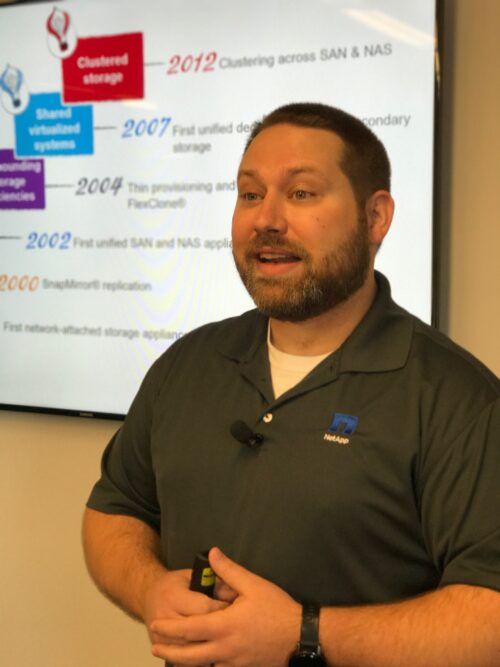
Andrew Sullivan, Technical Marketing Engineer at NetApp, introduces the delegates to the company’s efforts in DevOps and in the open source community. NetApp has had an OpenStack team since 2011, but over the last 18 months have expanded that into an open ecosystem team. Puppet, Chef, OpenStack, Jenkins, containers, Kubernetes all are managed in that team. This is all organized under thePub, NetApp’s effort to enable developers and operate with best practices in the open.
Personnel: Andrew Sullivan
Watch on YouTube
Watch on Vimeo
Kapil Arora, Cloud Platform Architect at NetApp, reviews the company’s work in managing persistent data in Kubernetes. This data can come from an object store or a database. He runs through how Kubernetes handles persistent data by default and how this can be extended with volume plugins.
Personnel: Kapil Arora
Watch on YouTube
Watch on Vimeo
Kapil Arora, Cloud Platform Architect at NetApp, demonstrates on a four node cluster defining storage classes in Kubernetes with MySQL. This creates disks that are dynamically created, opaque from a user perspective. These storage classes can have integrated QoS defined with quotas per individual namespaces.
Personnel: Kapil Arora
Watch on YouTube
Watch on Vimeo
Andrew Sullivan, Technical Marketing Engineer at NetApp, goes over some of the abilities of Trident, which can manage store within Kubernetes. He then expands into desired state configuration, the ability to encapsulate what an application looks. Containers simplify being able to define and reproduce an application across infrastructures via automation tools like Puppet, Chef, and Ansible. He then reviews NetApp’s continuous integration and deployment methodologies.
Personnel: Andrew Sullivan
Thank you for being part of the Tech Field Day community! Our mailing list is a great way to stay up to date on our events and technical content, and we appreciate your signup.
We promise that we’ll never spam you, send ads, or sell your information. This list will only be used to communicate with our community about our events and content. And we’ll limit it to no more than one message per week.
Although we only need your email address, it would be nice if you provided a little more information to help us get to know you better!