Watch on YouTube
Watch on Vimeo
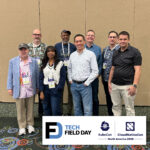
VMware by Broadcom began its Tech Field Day session at KubeCon North America 2026 by showing how VMware vSphere Kubernetes Service (VKS) fits into VMware Cloud Foundation (VCF) as a core service for an on-premises private cloud, alongside virtual machines and a container service. Timmy Carr, a longtime VMware and Kubernetes product leader, explained that Broadcom renamed the former TKG Service to VKS to end years of confusion across Tanzu product names and make it clear that Kubernetes is included in every VCF and VMware vSphere Foundation (VVF) subscription. Any customer on vSphere 8 or later can enable the Supervisor and start running clusters. Tanzu remains a separate offering focused on Cloud Foundry, Bitnami-based images, and data services. VKS is CNCF-certified Kubernetes, ships each new upstream release within two months, and supports each version for 24 months, giving enterprises a longer runway than the community standard. Platform teams can provision clusters through the UI, CLI, or GitOps, or delegate CPU, networking, and storage quotas to application teams for self-service.
Security hardening was a major focus of the past three releases. VKS supports Canonical Ubuntu (with Ubuntu Pro support included for VCF customers), Broadcom’s own Photon OS, and custom images such as Windows or RHEL. Photon OS is moving step by step toward an immutable node OS: VKS 3.7 locked down the user partition, VKS 3.8 disables SSH access, the OS layer is signed and verified through secure boot, and Advanced Intrusion Detection Environment (AIDE) file integrity monitoring now reports unexpected file changes. For compliance, VKS added OPA Gatekeeper in version 3.6 and policy bundles in version 3.7 that align clusters with baselines such as CIS, leaving the audit itself to the customer and their auditor.
To reduce operational burden, VKS 3.8 introduces chained upgrades, which step a cluster through multiple Kubernetes versions with a single action in the UI, CLI, or GitOps workflow, while checking workload health factors such as pod disruption budgets before proceeding. The add-ons API introduced in VKS 3.6 manages add-on dependencies during upgrades and now supports any Helm chart, and an Argo CD Supervisor service supports GitOps-driven configuration. Carr noted that Broadcom is a top-three long-term contributor to Kubernetes, including Cluster API, etcd, containerd, and CSI, and highlighted two KubeCon announcements: a workload conformance effort with SIG Apps and SIG Architecture to verify that applications are portable across Kubernetes distributions, and the open-sourcing of the VM API that VCF uses to define virtual machines declaratively through Kubernetes. The session closed with demos of a chained upgrade from Kubernetes 1.35 to 1.37 and a one-click installation of the Headlamp dashboard as a cluster add-on.
Personnel: Timmy Carr
Thank you for being part of the Tech Field Day community! Our mailing list is a great way to stay up to date on our events and technical content, and we appreciate your signup.
We promise that we’ll never spam you, send ads, or sell your information. This list will only be used to communicate with our community about our events and content. And we’ll limit it to no more than one message per week.
Although we only need your email address, it would be nice if you provided a little more information to help us get to know you better!