Watch on YouTube
Watch on Vimeo
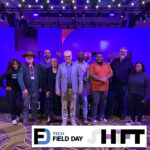
Recorded at Commvault SHIFT 2026 in Nashville, this second Tech Field Day Roundtable explored the collision between AI and cyber resilience. Stephen Foskett opened by noting that Commvault CEO Sanjay Mirchandani sees AI not only as an external threat, used for exploits and social engineering, but also as an internal risk when an organization’s own agents cause problems. Michael Fasulo of Commvault said most of what he hears from customers comes back to fundamentals like short-lived tokens, least privilege, and least agency, which many people wrongly assume don’t apply to AI. Romeo Gardner admitted that small businesses, and sometimes he himself, treat agents as exceptions to the rules, handing them keys and tokens they would never give an employee. When Fasulo questioned whether trust is even the right word for agents, the panel leaned toward supervision and confidence instead. Gardner described his own agents holding a staff meeting and concluding that he was the blocker, while Wolfgang Goerlich and Karen Lopez noted that security has long relied on rational human actors who want to keep their jobs, an assumption that does not hold for agents that hallucinate and act on curiosity. Shala Warner described constantly inserting checkpoints for her own agents and warned that coding assistants can read whatever is open in the editor even when it is never saved or committed.
The discussion then turned to how organizations can govern this new class of actor. Fasulo explained that Commvault’s approach of discover, detect, and recover includes stopping sensitive data such as Social Security numbers before it reaches an LLM, and that many customers still struggle simply to know where their sensitive data lives. Gardner said small businesses often lack any AI usage policy or standard platform, leading to shadow AI where employees feed company IP into their own model instances. Girard Kavelines compared the moment to the early days of network automation and urged a baseline, a proof of concept, and a formal leveled approach, though Goerlich pointed out that automation is deterministic while AI models are not, so the gap must be closed at the level of tool calls, API calls, and the ability to undo. Fasulo agreed that if you need a deterministic outcome, AI is the wrong tool and relying on it amounts to hoping. Lopez offered a counterexample where she trusts vector search with embeddings to find sensitive data at scale more than any human or handwritten algorithm, with Fasulo adding that verification is still essential. Fasulo also predicted a coming wave of observability and explainability tools to show how agents reached their decisions.
Foskett then asked how organizations can remediate AI-driven damage when there is no longer a single point in time to roll back to. Fasulo described how Commvault builds on last year’s granular recovery to orchestrate a synchronized restore across databases, vector stores, and back ends, recovering the state of the whole stack rather than individual files. Kavelines, Warner, and Gardner all emphasized that restoring data is meaningless if the application and infrastructure remain down, and Kavelines recounted a session on rebuilding a destroyed Active Directory forest manually. Goerlich observed that organizations survive ransomware and extortion when they have a team that knows and executes a plan while keeping the drama low, and Fasulo stressed feeding lessons back into the system so the same failure does not recur. Lopez encouraged teams to practice orchestrated recovery in dev and test environments rather than coordinating by email and phone calls. Foskett and Fasulo reflected that backup was always only a means to recovery, and the panel agreed that expectations for recovery time have shrunk dramatically. Foskett closed by urging business leaders to invest in recovery now, because failure is a question of when rather than if, and hope is not a strategy.
Personnel: Girard Kavelines, J Wolfgang Goerlich, Karen Lopez, Michael Fasulo, Romeo Gardner, Shala Warner, Stephen Foskett
Thank you for being part of the Tech Field Day community! Our mailing list is a great way to stay up to date on our events and technical content, and we appreciate your signup.
We promise that we’ll never spam you, send ads, or sell your information. This list will only be used to communicate with our community about our events and content. And we’ll limit it to no more than one message per week.
Although we only need your email address, it would be nice if you provided a little more information to help us get to know you better!