Watch on YouTube
Watch on Vimeo
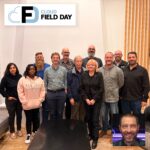
Moderator Alastair Cooke opened the Cloud Field Day 26 delegate roundtable by noting how much the meaning of “cloud” has shifted over 26 editions, and the delegates quickly agreed on the event’s defining theme: a far more mature, nuanced approach to AI. Chris Williams said the era of vendors simply sprinkling AI on everything has given way to serious discussion of tokenomics, the costs of frontier models, and choosing between open-weight local models and frontier ones. He added that presenters now accept AI is non-deterministic and should be used judiciously. Jeff pointed to Selector, long committed to deterministic methods, which now puts LLMs on the front end only to present answers already derived deterministically. Ned expanded on this, describing classifiers and other non-LLM machine learning models doing the heavy analytical lifting. The group summed up the principle this way: if removing the LLM breaks the product, you have only built a chatbot. Karen welcomed the focus on common data models and treating system data as production data, enriched both by AI and by comparison with other data. She also stressed that AI was presented as one tool among many, judged by the outcome it achieves.
First-time and returning delegates added their own perspectives. Daryl, back from the vendor side after years of bare metal work, praised Clumio for listening to customers and delivering fine-grained restoration that once required hundreds of hours of internal development. Cooke framed this as augmenting native cloud features where they fall short of business requirements. Matt, coming from networking and AWS, valued learning about the non-AWS world, especially VMware’s challenges with bare metal and distributing GPU workloads. Several delegates singled out VMware’s AI management panel, which tracks token consumption and time-to-first-token. They saw it as a clear signal that enterprises will run local models and need metrics and cost visibility for expensive GPU infrastructure. Shala said AI use is now out in the open and described her work making agent outputs repeatable despite non-deterministic models. Doug Schaefer described AI becoming a means to an end rather than the end itself, and welcomed broader multi-cloud support. That prompted Cooke to argue that hybrid multi-cloud is the unavoidable, messy enterprise reality because of mergers, acquisitions, and differing business requirements. Vriti, based in Australia, observed a shift toward hybrid in the ANZ region. She said the bigger question for critical infrastructure enterprises is AI readiness amid widespread shadow AI, and she noted that FinOps and tokenomics make conversations with business executives easier.
When Cooke asked which companies and topics they would like to see at future events, the answers centered on governance and control. Chris Williams wanted tactical guidance on keeping AI agents within IAM boundaries and credibly maintaining SOC, HIPAA, or FIPS compliance when agents can roam through systems. Shala asked for vendors of enterprise-wide scanning and indexing tools, which raises the question of who watches the agents, including logging and accountability. Vriti recounted an identity vendor admitting that agent identity was not yet on its roadmap. Karen argued that data and AI governance should be embedded in every product rather than sold as separate tools, particularly as legislation and regulatory pressure grow. She also called for vendors to make their systems interoperate instead of guarding narrow moats or pushing monolithic suites. Cooke noted the rise of MCP as a standard for passing data between systems. He added that soaring storage and memory costs make sharing data remotely more sensible than creating extra copies. Doug closed with a request for tools that manage workloads, infrastructure as code, and security posture consistently across edge and cloud from a single pane of glass. Cooke agreed that treating edge applications as separate from their cloud or data center counterparts, with different tooling and deployment cadences, remains a real challenge.
Personnel: Alastair Cooke
Thank you for being part of the Tech Field Day community! Our mailing list is a great way to stay up to date on our events and technical content, and we appreciate your signup.
We promise that we’ll never spam you, send ads, or sell your information. This list will only be used to communicate with our community about our events and content. And we’ll limit it to no more than one message per week.
Although we only need your email address, it would be nice if you provided a little more information to help us get to know you better!