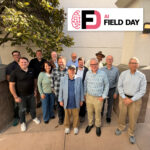
This episode of the Utilizing AI podcast, recorded live at AI Field Day 9, delves into the provocative question of whether NVIDIA is emerging as the new IBM, the foundational pillar of the burgeoning AI industrial complex. Moderator Stephen Foskett sets the stage by likening NVIDIA’s current dominance to a “new big iron world” where nearly all major AI companies rely on its infrastructure. Panelists, including Scott Robohn, draw parallels to IBM’s historical indispensability in earlier technological eras, acknowledging that while no analogy is perfect, the rhyme of history suggests a similar pattern of a dominant central player. John Willis further emphasizes IBM’s long standing success in making itself indispensable to large enterprises, particularly in critical systems.
However, many panelists argue against NVIDIA fully replicating IBM’s historical monolith. Mitch Ashley and Frederic Van Haren suggest it is premature to declare a sole winner in an AI landscape characterized by numerous powerful entities both competing and collaborating. Frederic highlights the “indispensability trap,” noting that long term value often lies in the software and applications built atop infrastructure, an area NVIDIA is actively pursuing. Keith Townsend strongly posits that, unlike IBM’s comprehensive lock-in, NVIDIA has yet to achieve the same level of software layer control, as many major AI service providers are largely abstracted from the underlying GPU hardware. Ron Pagani Jr. views NVIDIA’s strategy as an “ecosystem play,” but points out that the company, while a first mover, faces competition and is not the only option for compute. Stephen Foskett observes the unusual trend of some dominant AI model providers openly admitting to having “no moat,” making switching easy for users, yet he identifies NVIDIA’s CUDA as a crucial, multi-trillion dollar moat.
The discussion also explores the dynamic nature of innovation and the distinct requirements of AI inference versus training. Mitch Ashley identifies innovation as the greatest threat to NVIDIA’s position, noting that large companies often rely on acquisitions, a strategy that eventually faces limitations. Keith Townsend highlights that while NVIDIA holds a strong moat in AI training, the field of inference is wide open, with other players like AMD, Google, and Apple presenting viable alternatives. The panel recognizes that budgetary constraints and the need for efficiency will drive demand for “good enough” hardware and distributed inference capabilities, creating opportunities for neo-cloud providers and alternative XPU solutions. Ultimately, Stephen Foskett concludes that NVIDIA appears aware of these evolving challenges and is proactively working to defend its position and secure future relevance by both building a moat and expanding its influence across the AI ecosystem.
Personnel: Stephen Foskett
Thank you for being part of the Tech Field Day community! Our mailing list is a great way to stay up to date on our events and technical content, and we appreciate your signup.
We promise that we’ll never spam you, send ads, or sell your information. This list will only be used to communicate with our community about our events and content. And we’ll limit it to no more than one message per week.
Although we only need your email address, it would be nice if you provided a little more information to help us get to know you better!