
HPE Networking Data Center Evolving AI data Center Architectures with Praful Lalchandani
AI infrastructure is rapidly evolving from centralized training environments into complex inference-driven systems in which a single workload can traverse front-end, back-end, storage, and security fabrics. HPE Networking’s strategy is to deliver open, secure Ethernet for every AI fabric (scale-up, scale-out, and scale-across), resulting in high performance, resilience, operational consistency, and strong customer momentum. Praful […]
DDN Presents at AI Field Day 9
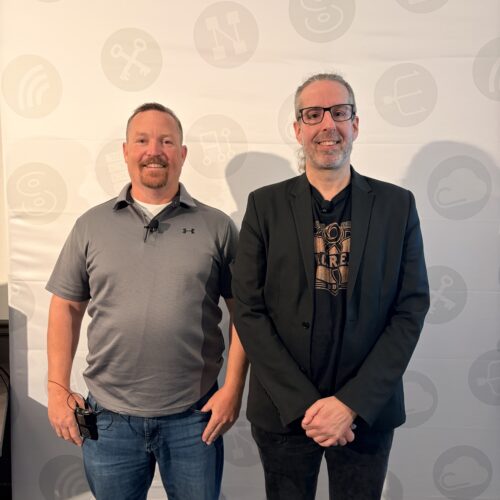
CoreWeave Presents at AI Field Day 9
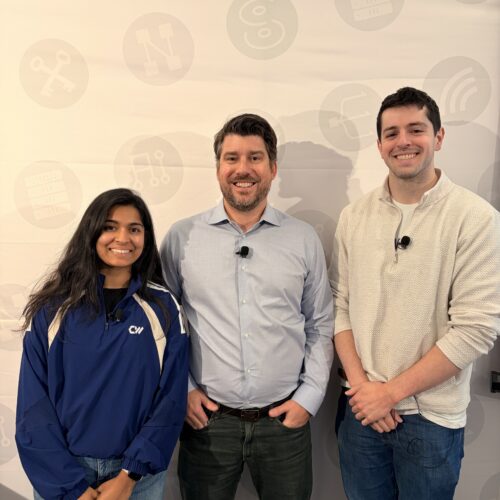
ETR Presents at AI Field Day 9

Signal65 Presents at AI Field Day 9

OpsMill Intent: AI Ops You Can Trust
Xavier Martins-Rivas, field CTO of OpsMill, explained how Infrahub’s intent model provides a trusted foundation for AI operations. The session covered moving institutional knowledge out of individual engineers and into structured, versioned, validated data, a top-down knowledge graph linking services to configurations and devices, and guardrails that let AI agents act on infrastructure safely. Martins-Rivas […]
Behind the Demo – OpsMill Infrahub + Arista AVD
Damien Garros, co-founder and CEO of OpsMill, explained the Arista AVD integration behind the earlier Infrahub demo. The session covered how OpsMill embedded Arista’s open-source PyAVD library in Infrahub’s transforms and generators, replacing AVD’s YAML files with data managed in Infrahub to produce validated Arista configurations within a broader multi-domain orchestration workflow. Garros presented the […]
From User Request to Multi-Domain Orchestration with OpsMill Infrahub
Alex Gittings of OpsMill demonstrated how Infrahub turns a simple user request into coordinated changes across networking, security, and compute. Using a simulated ISP and data center environment, the session showed self-service requests through a Backstage portal, generators that build technical data from business intent, branch-based review, and deployment through Nornir and Kubernetes. Gittings, a […]
OpsMill Infrastructure Automation and AlOps, Built on Data You Can Trust
Damien Garros of OpsMill presented the company’s vision for simplifying infrastructure automation through Infrahub, its platform for capturing infrastructure intent. The session covered the evolution from imperative to declarative and GitOps automation, a three-layer model of business, technical, and component intent, native version control, and the schema, transformations, and generators that let organizations build custom […]
Nokia Network Coding and Testing – Demo of What We Do Everyday
Aakash Kumar and Ahmed Abutaleb of Nokia demonstrate the everyday change workflow Nokia IT uses for its data center fabrics. Working through Cursor in natural language, they show documentation generated from code, a GitLab branch tied to a change number, an on-demand digital twin in EDA, automated traffic testing, and an auto-generated merge request, before […]
Nokia Architecture Drivers and Implementation
Ahmed Abutaleb, data center architect at Nokia, explains how the problems of an inherited multi-vendor environment shaped the architecture of Nokia IT’s new data centers. He walks through templated building blocks, intent expressed as code in Git, a Kubernetes-native controller, an on-demand digital twin, and continuous drift detection, along with brownfield migration lessons and the […]
Modernizing IT Networks with Nokia EDA and SR Linux
Mike Bushong and Pushpendra Pandey of Nokia open the company’s presentation by examining the widening gap between AI-driven industry hype and the day-to-day realities of enterprise network operations. Using Nokia’s own IT organization as a real-world case study, they explain why the company consolidated a complex, multi-vendor data center estate onto SR Linux and EDA, […]
From Troubleshooting to Configuration Through Natural Language with NetBeez
Panickos will demonstrate how AI is being integrated into NetBeez NextGen to help operators troubleshoot problems and manage monitoring using natural language. The session will cover the NetBeez AI architecture, including support for NetBeez-hosted AI and customer-selected AI providers. Live demonstrations will show an L1 operator using AI to investigate and summarize a user issue, […]
How NetBeez Agents Turn Continuous Measurements into Fault-Domain Evidence
Panos takes a hands-on look at how NetBeez continuously measures network experience across branch offices, Wi-Fi networks, and remote workers. Using the NextGen interface and Buzz dashboard, he will show how teams can identify degraded experience, understand emerging and recurring issues, and isolate the likely fault domain using evidence collected from the user’s perspective. The […]
From Troubleshooting to Continuous Network-Experience Assurance with NetBeez
NetBeez was built around a simple idea: understand network performance from the user’s perspective. In this session, Stefano will introduce NetBeez, explain how the company and platform have evolved since its previous Networking Field Day appearance, and share the vision behind NetBeez NextGen. The focus is the shift from primarily reactive troubleshooting toward continuous network-experience […]
HPE Campus Automation for the Self-Driving Network
Learn how Model Context Protocol (MCP) enables cross-domain automation across both HPE Aruba Central and HPE Mist that simplifies IT operations. This session explores how HPE Self-Driving Network uses MCP to share context, trigger actions, and enhance network intelligence. See real-world examples of how MCP connects network intelligence with agent-driven workflows to enable more efficient, […]
HPE Campus CX Switching Portfolio Advancements with Yash Nagaraju
Most troubleshooting time is spent finding the problem, while much of the downtime comes from applying critical network and security updates. Join us for a discussion and live demo of the latest innovations in HPE Networking CX switches, including Dynamic Packet Capture, end-to-end application diagnostics, and enhanced In-Service Software Upgrade (ISSU) capabilities that help accelerate […]
HPE Campus EX Switching Portfolio Deep Dive with Umang Saini
Operational disruptions are rising as machine-speed attacks force organizations to increase the pace of security and vulnerability patches. For organizations caught in between uptime and risk, our in-service software upgrades (ISSU) preserves user experience and business continuity without maintenance windows. Building on this foundation, the EX5200 combines every-port multigig connectivity, rich telemetry, and scalable Virtual […]
HPE Campus Zero-Trust Inline Segmentation with Rohan Chadha
Most organizations assume a compromise will eventually occur. The challenge before us is preventing attackers from turning a single compromised user or device into a widespread business disruption. This session will show how HPE Networking Zero Trust Inline Segmentation (ZTIS) helps enterprises contain threats and reduce the blast radius of attacks through identity-based enforcement at […]
Journey to Self-Driving in HPE Switching
See how HPE Networking switches and HPE Mist come together to simplify deployment, improve visibility, and accelerate troubleshooting. This session includes a demo of switch onboarding using CX switches, including cloud-native management, Wired SLEs, Marvis Actions, and AI-native assurance. Gain deep insights into your network and how you can improve user and device experiences while […]
Intro to HPE Self-Driving Networks with Sanjoy Dey
Sanjoy Dey of HPE Networking introduced the company’s campus and branch switching portfolio and its vision of self-driving networks. He outlined the AI-native, cloud-native, and secure-by-design foundations shared by Mist and Aruba Central, along with six tenets guiding the switching roadmap, from agentic switching and zero trust LAN to always-on operations and the combined Juniper […]