






|
|

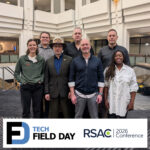
This video is part of the appearance, “Commvault Presents at Tech Field Day Extra at RSAC 2026“. It was recorded as part of Tech Field Day Extra at RSAC 2026 at 9:00-10:00 on March 24, 2026.
Watch on YouTube
Watch on Vimeo
The presentation centers on the critical evolution from traditional disaster recovery to a more robust framework of cyber resilience. Chris Bevil, a recovering CISO, shares his transition from the high-stress frontline of security to Commvault, where he now focuses on the intersection of IT, security, and board-level business objectives. He emphasizes that the modern threat landscape has turned data recovery into a board-level priority, shifting the conversation from technical patching metrics to the fundamental business need for a faster, safer, and more trustworthy recovery process.
A central theme of the session is the introduction of Resilience Operations, or ResOps, a new methodology designed to break down the silos between IT infrastructure, cloud, and security teams. Bevil illustrates the current gap in organizational readiness by noting that many leaders still lack integrated incident response plans, despite the inevitability of compromise. He argues that disaster recovery is no longer sufficient if it cannot guarantee clean recovery. Without the ability to verify that restored data is untainted by ransomware or malware, organizations risk falling into a cycle of reinfection, a point underscored by a cautionary tale of an organization that took nearly 300 days to recover only to be hit again six months later.
The technical core of the session highlights the Commvault Cloud Unity platform and its sophisticated Resilience Operations (ResOps) methodology, which integrates high-fidelity signals from anomaly detection and deep data discovery. By utilizing a multi-layered defense-in-depth approach—including YARA rules, signatures, and a deep scanning engine capable of detecting polymorphic and zero-day threats—Commvault ensures that recovery is not just possible, but clean. A standout feature discussed is synthetic recovery, an automated process that surgically identifies and skips malware or encrypted files across backup cycles to restore only the last known good versions. This innovation significantly minimizes data loss and eliminates the manual step-restore guesswork traditionally required by administrators during an active breach.
The technical demonstration led by David Cunningham highlights Commvault’s Threat Scan dashboard, a multi-layered defense-in-depth system that integrates anomaly detection, signature-based scanning, and machine learning. This platform identifies risks by correlating signals from internal sensors and third-party partners like CrowdStrike, categorizing resources into critical, high, or moderate risk levels. A key feature is the ability for administrators to perform threat hunts by injecting their own Indicators of Compromise (IOCs), such as YARA rules or hashes from the Google Threat Intelligence platform, to scan both current and historical backup data for hidden threats. To assist non-security personnel, the platform utilizes Arlie, an AI-powered assistant that provides real-time context and guidance during investigations.
Personnel: Chris Bevil, David Cunningham, Michael Fasulo